
Assessment first
The decision to use a modality follows the diagnosis and clinical findings rather than replacing assessment.
A selectively used clinical modality
Therapeutic ultrasound is a clinic-based modality that may be considered for selected presentations. It is not necessary for every injury and should not replace active rehabilitation.
Book an AssessmentA treatment plan with a reason behind it
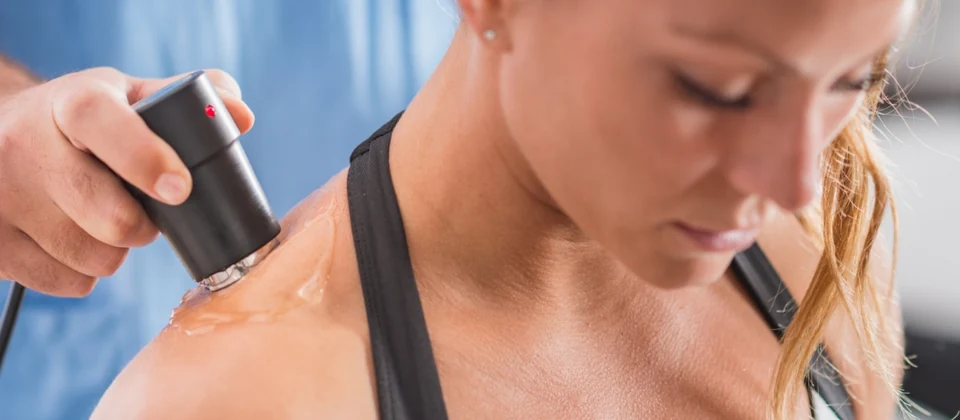
Therapeutic ultrasound uses sound-wave energy delivered through a treatment head and coupling gel. It has historically been used for a range of soft-tissue presentations.
We take a selective approach. If a modality is used, it should fit the assessment, current evidence, safety considerations, and a clear clinical goal while exercise and functional progression remain central.
Understanding the treatment
Therapeutic ultrasound is different from diagnostic ultrasound imaging. It is a treatment modality applied over a selected area using a handheld transducer.
The parameters and decision to use it depend on the tissue, condition, contraindications, and clinical reasoning. It is not a universal treatment for pain or injury.
Why it may be used
In selected cases, a physiotherapist may consider ultrasound as an adjunct to care. Whether it is useful depends on the condition and the treatment objective, and it should not delay the active work required for strength, mobility, or function.
What it may support
The value of a treatment method is measured by whether it supports meaningful movement, capacity, and progress, not simply by whether it was performed.
The decision to use a modality follows the diagnosis and clinical findings rather than replacing assessment.
Ultrasound is considered only when there is a reasonable clinical purpose for the presentation.
Contraindications and treatment area are reviewed before application.
Exercise, education, and functional progression continue to drive the broader rehabilitation plan.
What to expect
The exact technique may change, but the logic should stay understandable: assess, choose a purpose, check the response, and keep moving toward independence.
We identify what the modality is expected to add to treatment.
The treatment area, condition, precautions, and contraindications are reviewed.
Parameters are chosen according to the clinical objective.
The session still progresses toward movement, strength, and function.
Ready when you are
Book an assessment to determine which treatment approaches are actually appropriate for your presentation.
Your local Milton clinic
You do not need to know which technique to book. Tell us what is bothering you and what you want to get back to, and we can help determine the next step.