
Comfort with movement
A selected area may feel less sensitive during movement immediately after treatment.
Instrument-assisted soft-tissue care
Instrument-Assisted Soft Tissue Mobilization uses a clinical tool over selected tissues. It may be used to support comfortable movement or loading, but it remains one part of a broader rehabilitation plan.
Book an AssessmentA treatment plan with a reason behind it
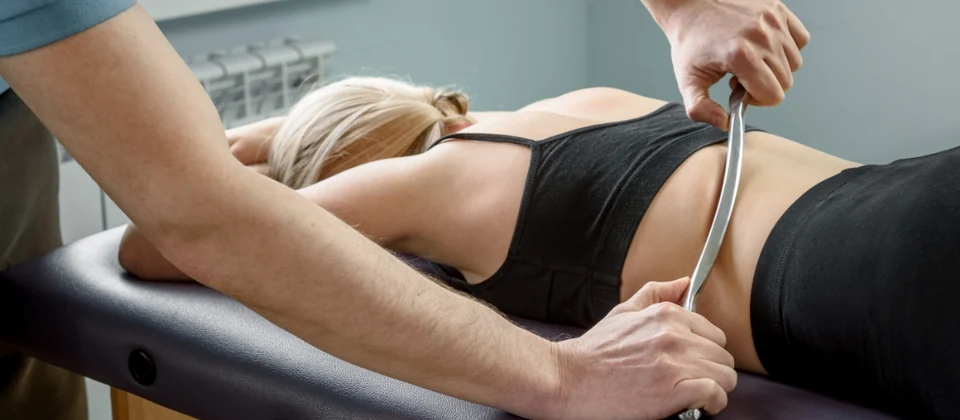
Instrument-Assisted Soft Tissue Mobilization, often shortened to IASTM, involves a therapist using a smooth-edged tool over selected soft tissues. The pressure and area treated are adjusted according to the presentation and your tolerance.
We do not use instrument treatment simply because an area feels tight. It is considered when the assessment suggests a short-term change in comfort or movement could make active rehabilitation easier.
Understanding the treatment
IASTM is a hands-on technique performed with a specialized tool rather than the therapist's hands alone. It may be applied to muscles, tendons, or other soft tissues as part of a physiotherapy session.
The technique should not be presented as breaking up scar tissue or permanently changing tissue with a few passes of a tool. Its usefulness is judged by how you respond and whether it supports function.
Why it may be used
IASTM may be considered when local soft-tissue sensitivity or movement restriction is affecting a task and a brief manual intervention helps you participate more comfortably in exercise or progressive loading.
What it may support
The value of a treatment method is measured by whether it supports meaningful movement, capacity, and progress, not simply by whether it was performed.
A selected area may feel less sensitive during movement immediately after treatment.
The technique can be paired with active range-of-motion work rather than used in isolation.
If symptoms settle temporarily, that window can be used to practise strength or tendon loading.
The larger goal remains a plan you can continue without relying on the instrument.
What to expect
The exact technique may change, but the logic should stay understandable: assess, choose a purpose, check the response, and keep moving toward independence.
We identify whether a local soft-tissue intervention is relevant.
Treatment is brief, targeted, and adjusted to comfort.
We test whether movement or loading actually feels different afterward.
Strength, mobility, and graded activity remain central to recovery.
Ready when you are
Book an assessment to determine whether IASTM fits your presentation and what should follow it.
Your local Milton clinic
You do not need to know which technique to book. Tell us what is bothering you and what you want to get back to, and we can help determine the next step.