
Leg strength
Quadriceps, hamstring, hip, and calf strength contribute to control during high-demand tasks.
Lower-limb strength and movement training
ACL injury-prevention training focuses on strength, landing, deceleration, balance, and change-of-direction skills that can be integrated into sport preparation.
Book an AssessmentA treatment plan with a reason behind it
ACL injuries often occur during demanding athletic tasks such as landing, cutting, pivoting, or rapid deceleration. Prevention programs aim to improve the physical and movement capacities involved in those situations.
A useful program is repeated consistently and matched to the athlete's age, sport, training exposure, strength, and technical needs.
Understanding the treatment
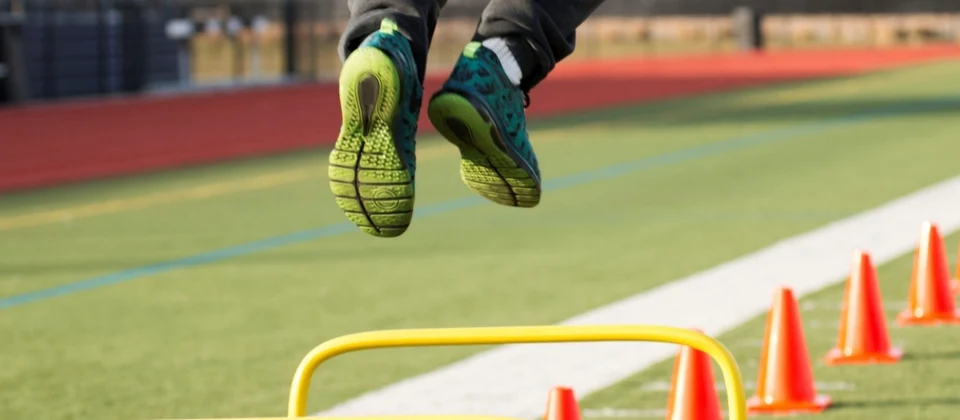
ACL prevention programs commonly combine lower-limb strength, jumping and landing practice, balance, agility, and neuromuscular training.
They are most effective as part of regular warm-up or training rather than a one-time screening or isolated exercise.
Why it may be used
Sport places high and rapid loads on the lower limb. Strength and repeated practice can improve how an athlete produces, absorbs, and redirects force during jumping, landing, cutting, and deceleration.
What it may support
The value of a treatment method is measured by whether it supports meaningful movement, capacity, and progress, not simply by whether it was performed.
Quadriceps, hamstring, hip, and calf strength contribute to control during high-demand tasks.
Repeated practice can improve how force is absorbed during single- and double-leg landings.
Athletes can practise slowing down before adding more complex cutting tasks.
Progressions can include reactive, multidirectional, and fatigue-related demands.
What to expect
The exact technique may change, but the logic should stay understandable: assess, choose a purpose, check the response, and keep moving toward independence.
We review sport demands, training history, strength, movement, and any prior injury.
Lower-limb capacity is developed before relying on technique alone.
Tasks progress from controlled drills toward faster, more reactive movement.
The goal is a repeatable program that fits regular sport preparation.
Ready when you are
An assessment can help build an ACL-prevention program around your sport, current capacity, and training goals.
Your local Milton clinic
You do not need to know which technique to book. Tell us what is bothering you and what you want to get back to, and we can help determine the next step.